I’m writing a game about witches. It explores two things: the magic circle and bridging mostly meta level, third person tabletop play with highly ritualistic LARP elements.
Why should you play this? To explore making magic with your friends. To feel part of a magic circle in a more pronounced fashion than in most tabletop roleplaying games.
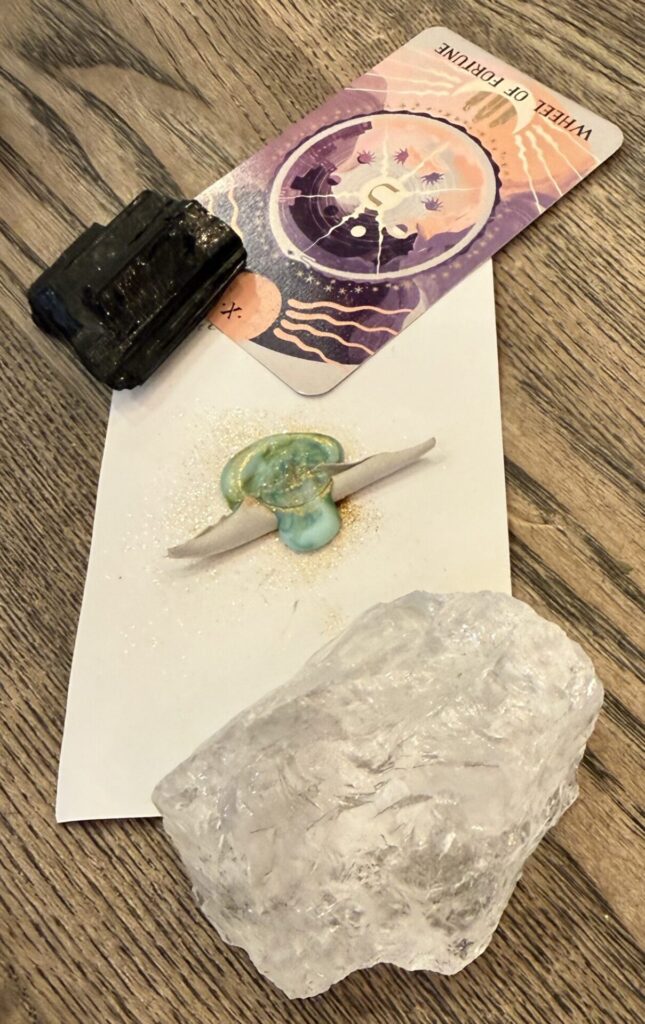
Caveat: I do not consider myself a witch of any sort. This game does not portray any specific belief systems. It borrows heavily from a wide spectrum of beliefs and practices, but stops short of appropriating anything highly defined or culturally specific. If you can’t pretend you’re governed by the moon, the planets, the zodiac signs, and that the magic you make with your sisters affects the world, you shouldn’t play this game.
Every player portrays a sister. While the characters are not necessarily women by birth, nor related in blood, the players or characters cannot reject femininity.
The magic circle is highlighted. The players hold hands at game beginning, saying that the circle is now complete and that the game begins, and the opposite at game end: the circle is disbanded, and the game is over. Additionally, all magic rituals during the game start and end with the participants (two or more sisters) forming and disbanding another magic circle around the spell, again holding hands and saying the words. This felt powerful in practice.
No game master is needed. The players create a witch coven. Instead of rolling dice to generate characters, you use the time of the day, the weather outside, and the moon phase to determine the who, where, and when. Each sister is assigned a zodiac sign, and if there are more than two players, everyone gets a best friend and a competitor (not enemy).
To find out what you need to do in the fiction, you do a light tarot reading of what’s happening. One of the sisters is in trouble, and magic is needed to set things right. Everyone participates in this equally. This worked really well, bringing mini stories with each spread, allowing the players to steer the story where they liked every half an hour.
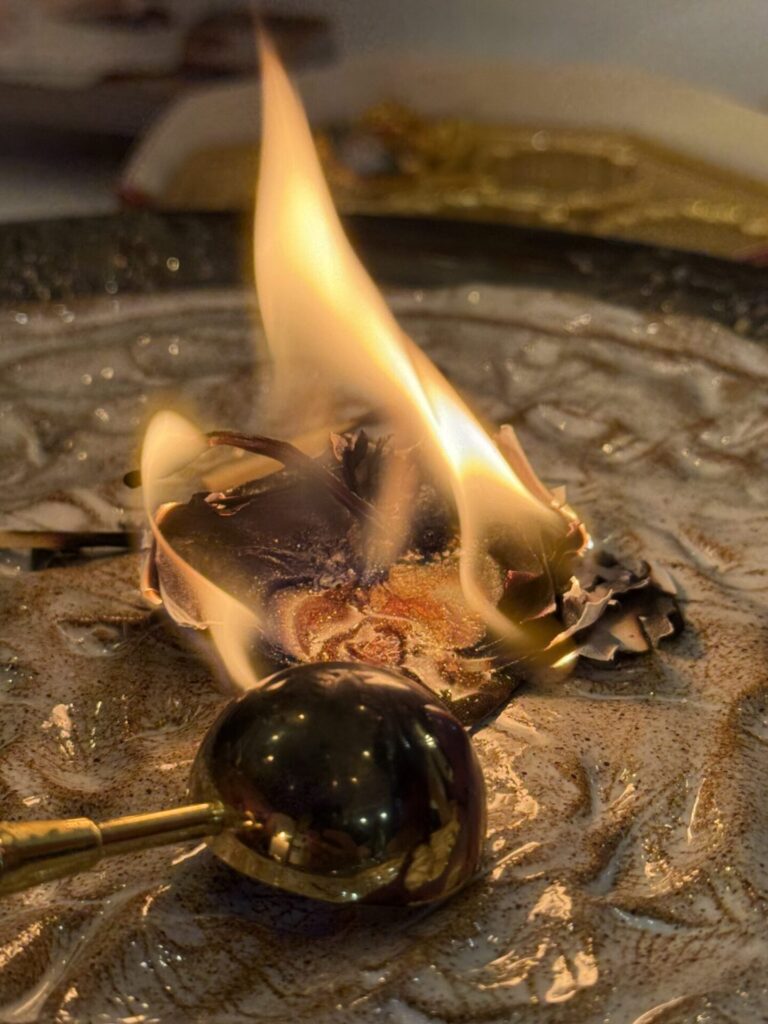
To work magic, you play one of the tarot cards you get at game beginning. Generally you need more than one card to beat the challenge laid out in the tarot spread. To combine cards, you do a spell. First you light a candle next to the cards being combined. Then you do a ritual. This can be anything; I provided the players with a list of proposed rituals. We used sealing wax, glitter, beeswax, incense, candles, folk magic poems from the 1800s, chanting, drawing, and the burning of all manner of things (somehow did not trigger the fire alarm) (caveat: please don’t burn anything you can’t control, and keep fire fighting equipment at hand). When the ritual is complete, the candle is extinguished, and the magic circle disbanded.
When you need more cards, you need to make a sacrifice. Sacrifices are solo rituals, and again improvised. We poured out tea, made food offers, burned candles and incense, defaced photographs, made promises, and shared secrets (the latter two in character).
The rituals worked really well. I’m planning on expanding on a list of proposed rituals by theme (empowerment, protection, etc) and the ritual materials at hand, as well as thinking about material-less versions of the rituals for more accessible and perhaps less intense play.
I have set the game in the modern time, and our context happened to land close to our real life circumstances. For some players this was a boon, and for others it made it harder to buy into the fantasy. I’m not sure how I think about that, going forward.
Interestingly, all the magic we worked could’ve been explained away as random chance and natural occurrences. None would have needed special effects on a screen. I didn’t set it up this way, but probably the real world context pointed us in that direction.
What’s next?
The ritual elements work well and feel like something I want to further explore. The overall structure needs work, as now the problems the sisters had were all disconnected. You could just do a bigger tarot spread in the beginning, and build in bigger problems, requiring more magic to deal with.
Similarly, the cost of magic was handled purely in fiction, while it could’ve also had a mechanical effect, perhaps corrupting the magic the sisters wield to a degree. This test version’s mechanical challenges were also fully transparent, and some manner of randomness would’ve been welcome.
Leave a Reply